Precision Compliance: How Domain-Specific Security Tools Are Rewriting the Economics of Risk Management
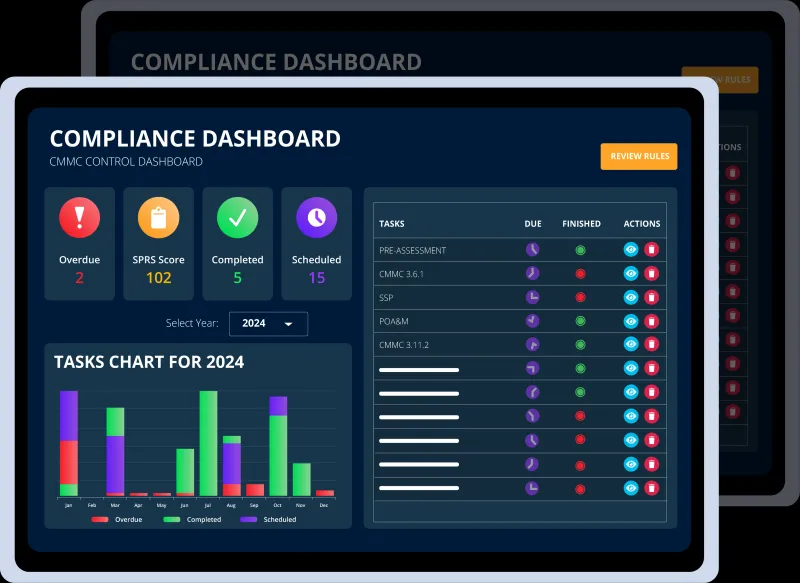
Photo: cybersecurity compliance audit dashboard enterprise security tools, via www.socsoter.com
For years, the dominant procurement logic in enterprise security was consolidation. Buy the largest platform your budget allows, configure it to your needs, and trust that a single vendor relationship would simplify your compliance posture. That logic is eroding — not because enterprise platforms have become less capable in absolute terms, but because the cost of bending a general-purpose tool toward a specific regulatory standard has become impossible to ignore.
Organizations operating under SOC 2, HIPAA, or FedRAMP requirements are not navigating a generic risk landscape. They are operating within tightly defined frameworks that carry specific control requirements, auditor expectations, and evidence standards. When a broad security platform attempts to serve all of those frameworks simultaneously, the result is rarely elegant. It is a configuration surface so expansive that the compliance team spends more time managing the tool than managing the risk.
The Configuration Debt Hidden Inside Enterprise Platforms
Enterprise security platforms are typically designed to be horizontal. They cover many industries, many frameworks, and many threat models — which means they are optimized for none of them in particular. For a company pursuing SOC 2 Type II certification, that horizontality translates directly into engineering hours. Policies must be mapped. Controls must be customized. Evidence collection pipelines must be built from scratch or approximated through integrations that were never designed with a specific auditor's expectations in mind.
This is not a hypothetical inefficiency. Security and compliance teams at mid-sized technology companies routinely report spending weeks — sometimes months — configuring enterprise platforms before those platforms are audit-ready. During that period, the organization is absorbing both the licensing cost of the tool and the fully loaded labor cost of the engineers and compliance officers doing the configuration work. The platform's sticker price, in other words, is rarely its true price.
Purpose-built compliance tools approach this problem differently. A tool designed specifically for SOC 2 readiness ships with control mappings, evidence templates, and auditor-facing reporting structures already embedded in its architecture. The configuration burden does not disappear, but it shrinks substantially — because the tool's designers made opinionated choices about what a SOC 2 audit actually requires, rather than leaving those choices entirely to the customer.
Audit Friction as a Measurable Cost Driver
One of the least-discussed costs in compliance operations is audit friction — the cumulative overhead generated by the process of preparing for, executing, and responding to an external audit. Audit friction includes time spent gathering evidence, time spent translating internal system outputs into formats auditors will accept, and time spent responding to auditor questions that arise because evidence is ambiguous or incomplete.
Generic platforms tend to produce high audit friction because their outputs are not calibrated to specific auditor expectations. A log export that satisfies an internal security review may not satisfy a SOC 2 auditor looking for specific fields, timestamps, and chain-of-custody documentation. When that gap surfaces mid-audit, the remediation cost is significant — and it is a cost that organizations frequently fail to anticipate during the initial platform selection process.
Specialized compliance tools reduce audit friction by producing outputs that speak the auditor's language natively. When evidence collection is built around a specific framework's requirements, the artifacts that reach the auditor are structurally aligned with what the auditor expects to see. This alignment compresses audit timelines, reduces back-and-forth, and lowers the probability of audit findings that require remediation before certification can proceed.
For organizations on aggressive certification timelines — a SaaS company pursuing SOC 2 to unlock enterprise sales, for instance, or a healthcare technology firm seeking HIPAA attestation before a major contract close — that compression has direct revenue implications. A faster certification cycle is not merely an operational convenience; it is a competitive advantage with a calculable dollar value.
FedRAMP and the Limits of Horizontal Coverage
FedRAMP represents perhaps the clearest illustration of where generic platforms reach their limits. The Federal Risk and Authorization Management Program imposes a control baseline that is extensive, technically specific, and subject to ongoing review by federal assessors whose standards are not negotiable. Organizations pursuing FedRAMP authorization — whether at the Low, Moderate, or High baseline — are not working with a framework that rewards approximation.
Enterprise security platforms that claim FedRAMP support frequently mean something narrower than their marketing implies. They may be FedRAMP-authorized themselves, but that authorization does not automatically extend to a customer's use of the platform. The customer must still demonstrate that their specific configuration of the platform satisfies the applicable control requirements — a process that requires deep technical documentation, third-party assessment, and sustained engagement with the Authorization to Operate process.
Tools built specifically for FedRAMP-bound organizations embed that process knowledge into their product design. They surface the right controls at the right time, maintain the documentation structures that federal assessors require, and reduce the surface area of ambiguity that tends to generate delays in the ATO pipeline. For government contractors and cloud service providers pursuing federal market access, that reduction in ambiguity is not a minor convenience — it is often the difference between meeting a program deadline and missing it.
Total Cost of Ownership: Rethinking the Comparison
The financial argument for purpose-built compliance tooling is most compelling when total cost of ownership is calculated honestly. Enterprise platform advocates frequently point to licensing cost as the primary comparison variable, and on that dimension alone, a specialized tool may appear more expensive on a per-seat or per-feature basis.
But licensing cost is only one component of TCO. Configuration labor, ongoing maintenance, audit preparation time, third-party assessment fees driven by platform ambiguity, and the opportunity cost of delayed certification all belong in the calculation. When those factors are included, the economics frequently invert. The specialized tool costs less — not because its licensing fee is lower, but because it eliminates entire categories of overhead that the enterprise platform requires.
This is not a universal conclusion. Organizations with genuinely heterogeneous compliance obligations spanning multiple frameworks simultaneously may find that a well-implemented enterprise platform offers adequate coverage across all of them. But for organizations with a defined primary framework — a healthtech company for whom HIPAA is the central compliance obligation, or a defense contractor for whom FedRAMP is the gateway to its target market — the precision of a purpose-built tool consistently outperforms the breadth of a general one.
A Strategic Reframe for Risk-Aware Procurement
The shift toward specialized compliance tooling reflects a broader maturation in how technically sophisticated organizations think about their security and compliance stack. The question is no longer simply which platform covers the most ground. It is which tool produces the right outcomes — faster certification, lower audit friction, defensible evidence — within the specific regulatory context the organization actually inhabits.
Risk-aware procurement starts with the framework first and works backward to the tool, rather than starting with the platform and attempting to configure it into compliance. That inversion of the selection process is modest in concept but significant in consequence. It produces stacks that are harder to sell in a boardroom slide deck — precision tools rarely make for impressive vendor logos — but far more effective in the environments where they are deployed.
For organizations where compliance is not a checkbox but a competitive condition, that effectiveness is the only metric that ultimately matters.