The Vault Doesn't Compile: Testing Escrow Before You Need It
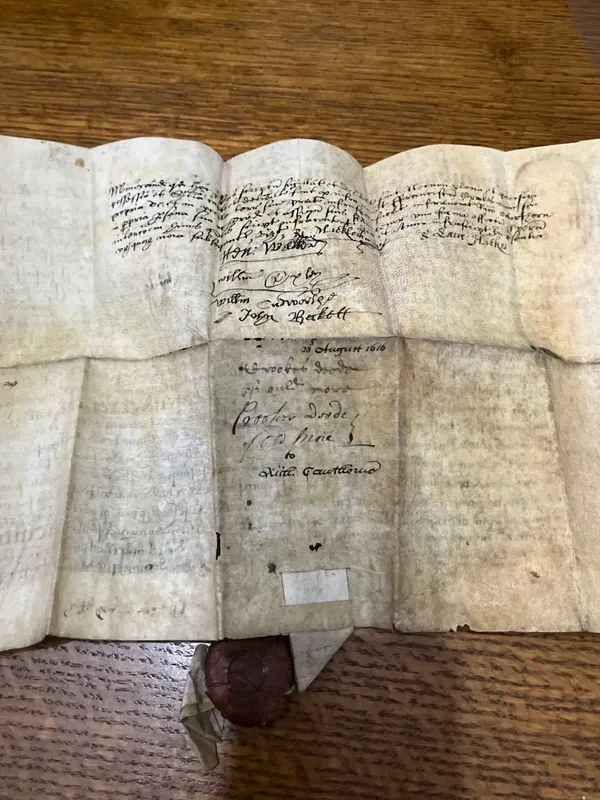
Photo: Unknown authorUnknown author, Public domain, via Wikimedia Commons
There is a particular kind of comfort in the escrow clause. It sits in the contract near the termination language, it has a defined release condition, and it implies that if the vendor disappears, the product does not. Legal teams like it because it is concrete. Procurement teams like it because it is a concession the vendor will usually grant. Almost nobody likes it enough to test it.
The clause is worth having. It is also, on its own, close to worthless, because the thing inside the vault is rarely the thing you would need. A deposit of source code is a deposit of a component. What makes a specialized platform run is a build, an environment, a set of third-party dependencies and licenses, a data schema, an operational history, and, most of all, the people who understood all of it. Escrow covers the first item and gestures at the rest.
What the Deposit Actually Contains
Ask for the deposit manifest before the renewal, not during the release process. In most agreements it lists source code for one or more components. It rarely lists the build scripts, the deployment configuration, the schema migration history, the container definitions, the secrets-management integration, or the infrastructure-as-code repository. Those are typically held as operational artifacts outside the escrow scope, which means a company that receives its escrowed code has received the engine and none of the mounting hardware.
The omission is not usually malicious. Escrow vendors define deposits around the intellectual property question — what would a liquidator sell — rather than the continuity question, which is what you are actually buying.
The Build Problem
Even complete source code does not produce a working system without an environment that can compile it. Specialized platforms accumulate years of pinned dependencies, private package registries, patched forks of open-source libraries, and build tooling configured by an engineer who has since left. If the vendor cannot produce a reproducible build from a clean environment on demand, your engineers will not be able to produce one in a crisis.
The test is straightforward and rarely requested: ask the vendor to build the system from the escrowed deposit in a clean sandbox and provide the resulting artifact along with a manifest of every dependency and its version. Vendors with disciplined release engineering will already have this as a byproduct of their own pipeline. Vendors who cannot produce it will usually explain why the escrow is "more of a legal document."
The Missing Half: Third-Party Code and Hosted Services
Most modern niche platforms are assemblies. They include commercial SDKs, licensed libraries, open-source components under a variety of terms, and model weights or hosted inference services that cannot be copied at all. A deposit that includes the vendor's own code and none of these licenses leaves you with a system you are not permitted to run or unable to operate.
For each third-party component, ask whether the license survives a change of control and whether the escrow agreement assigns or transfers the relevant rights. For hosted services, ask a plainer question: if the vendor is gone, what happens to your integration? Escrow cannot deposit an API.
People Do Not Fit in the Vault
The release condition is often triggered by insolvency, cessation of support, or a material breach. In practice, that is the moment the engineering team has already begun to disperse and the institutional knowledge required to operate the system has already thinned. A code deposit transfers files. It does not transfer judgment about which service to restart at 3 a.m. or why the billing reconciliation job must run before the export job.
This is why transition assistance language in the contract often matters more than the deposit itself. A clause obligating the vendor to provide a specified number of engineering hours at a defined rate, for a defined period after a qualifying event, converts an unbuildable deposit into an operable handover. It is less satisfying to read than an escrow clause and considerably more useful.
A Release Test You Can Run Before Renewal
Once a year, and always before renewal, run three checks. First, confirm the current deposit exists, is complete against the latest manifest, and was updated within the contractually required window; deposits routinely lag releases by several versions. Second, request a build verification from your escrow agent and have one of your own engineers attempt a build in an isolated environment using only what is in the vault. Third, review the release conditions against the failure modes you actually fear, and check the turnaround time, which commonly runs thirty to sixty days from a certified request.
The second check is the one that changes negotiations. A deposit that fails to build is not a safety net; it is a document that will be read aloud in a postmortem.
Exit Readiness Belongs in Procurement
The strongest exit plan is not a clause. It is a set of operational commitments negotiated at signing: a documented data export format with a defined completeness guarantee, a termination assistance period with named staff and hours, a commitment to deliver build documentation and environment manifests, and a named internal owner who reviews all three annually.
Escrow is a component of that plan, not a substitute for it. Treat the vault as one line item in an offboarding capability, and treat that capability as something you procure, budget for, and test — while the vendor is still healthy and still answering the phone.