The Accounting Blind Spot: How Engineering Teams Systematically Miscalculate the Cost of Specialized Tooling

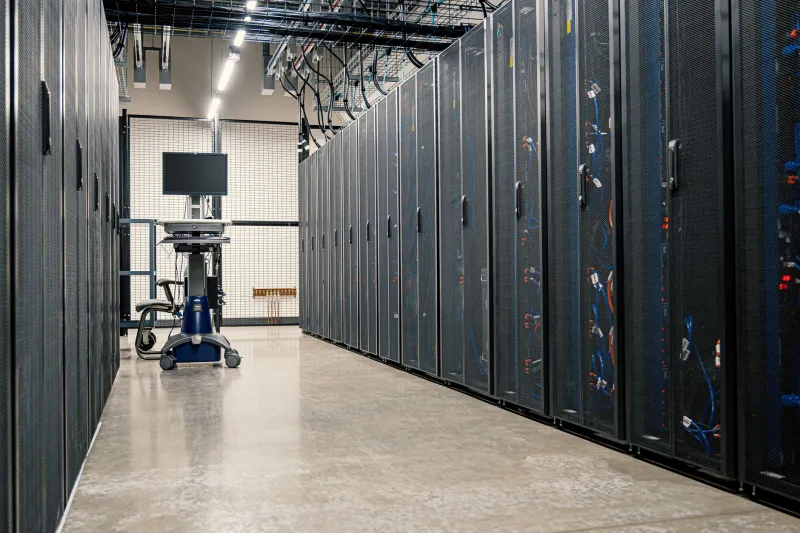
Photo by Photo by Vitaly Gariev on Unsplash on Unsplash
The Accounting Blind Spot: How Engineering Teams Miscalculate the Cost of Specialized Tooling
There is a particular kind of organizational confidence that forms around line-item costs. When a procurement team can point to a single contract value and declare it the cost of a platform, the conversation tends to close quickly. The number is visible, auditable, and defensible in a quarterly review. What rarely appears on the same slide is everything the organization spent compensating for what that platform could not do.
This is the accounting blind spot at the center of most tooling decisions: the tendency to measure the price of a specialized solution against the sticker cost of a generic alternative, while leaving the true operational burden of the generic choice entirely off the ledger.
The Visibility Problem in Cost Accounting
Financial teams are not making errors of negligence. They are making errors of visibility. The licensing fee for a monolithic platform is a known quantity. The hours an engineer spends building a workaround because the platform lacks a domain-specific capability is not recorded as a platform cost — it is recorded as engineering labor, or worse, it is not recorded at all.
This asymmetry systematically distorts the comparison. Specialized tools, which often carry higher per-seat or per-usage fees, appear expensive in isolation. Generic platforms, which distribute their inadequacies across dozens of indirect cost categories, appear economical. The organization is not lying to itself, but it is certainly not telling itself the whole truth.
Consider the anatomy of a single support ticket generated because a general-purpose observability platform cannot surface a signal that a domain-specific monitoring tool would surface automatically. That ticket consumes time from the engineer who filed it, the senior engineer who triages it, and potentially a vendor support representative. None of those costs are attributed to the platform's capability gap. They are absorbed into the operational baseline and forgotten.
Context-Switching as a Financial Category
One of the most underappreciated cost drivers in engineering organizations is cognitive overhead — the tax imposed on engineers who must mentally translate between what a tool offers and what their domain actually requires.
Context-switching is not merely an inconvenience. Research into knowledge work productivity has consistently demonstrated that the cost of interrupting a focused workflow extends well beyond the duration of the interruption itself. When an engineer working in a specialized domain — financial data pipelines, clinical systems integration, embedded firmware — must repeatedly adapt a generic interface to domain-specific requirements, the cumulative drag on output is substantial.
The challenge is that this cost is diffuse. No single instance of context-switching appears catastrophic. Over the course of a sprint, however, the aggregate effect on throughput can be significant, and none of it is attributed to the tooling decision that created the friction in the first place.
A rigorous TCO framework must treat context-switching as a calculable variable. If an engineering team of ten spends an average of thirty minutes per day navigating tool inadequacies that a purpose-built solution would eliminate, that represents approximately 1,300 engineer-hours annually — before accounting for the quality degradation that accompanies interrupted focus.
Tribal Knowledge and the Invisible Infrastructure Tax
Generic platforms impose a second category of hidden cost that is even more difficult to surface: the accumulation of tribal knowledge required to make them functional within a specialized context.
When a platform lacks native support for domain-specific workflows, teams compensate by developing institutional knowledge — undocumented conventions, informal configuration standards, and interpersonal expertise that lives in the heads of a small number of senior engineers. This knowledge is not a neutral asset. It is a liability that compounds over time.
Every departure from the team — voluntary or otherwise — erodes a portion of this informal infrastructure. Onboarding a replacement engineer requires not only standard ramp-up time but an extended period of knowledge transfer that is rarely budgeted accurately. Organizations that have operated a generic platform for several years in a specialized context frequently discover, upon leadership change or team restructuring, that significant institutional capability has quietly departed with the people who built the workarounds.
Purpose-built solutions reduce this exposure by encoding domain logic into the product itself. The knowledge lives in the tool, not in the team. That distinction has measurable financial consequences that standard procurement comparisons do not capture.
A Framework for Recalculating True TCO
Rebalancing the comparison requires expanding the cost model on both sides of the ledger. The following framework provides a starting point for engineering and finance teams conducting an honest evaluation.
Direct platform costs: License fees, usage-based charges, infrastructure overhead, and vendor support contracts. This is where most comparisons begin and, unfortunately, end.
Integration and configuration labor: The engineering hours required to configure a generic platform for domain-specific use, including custom connector development, API translation layers, and ongoing maintenance of those configurations as the platform and the domain evolve independently.
Incident and support overhead: The volume and resolution time of support tickets, internal and external, attributable to capability gaps in the current platform. This requires a deliberate audit of ticket categorization — most organizations will find that a meaningful percentage of their engineering support burden traces back to tooling inadequacy rather than user error.
Cognitive load and throughput degradation: An estimate of engineer-hours lost to context-switching, workaround navigation, and tool-imposed friction. Even conservative estimates, applied consistently across a team, tend to produce figures that surprise leadership teams accustomed to thinking about tooling cost in purely contractual terms.
Knowledge concentration risk: A qualitative and, where possible, quantitative assessment of the institutional knowledge required to operate the current platform effectively, the number of individuals who hold that knowledge, and the estimated replacement cost if that knowledge were lost.
Opportunity cost: The engineering capacity that is currently consumed by platform management rather than product development. This is perhaps the most strategically significant cost category and the one most consistently absent from procurement discussions.
Reframing the Conversation
The goal of this analysis is not to argue that specialized tooling is always the correct choice. There are contexts in which a general-purpose platform is genuinely sufficient, and the additional cost of a purpose-built solution would not be recovered through operational savings. The goal is to ensure that the comparison is made honestly.
Organizations that default to generic platforms because they appear cheaper are frequently making a well-intentioned but analytically incomplete decision. The costs that make specialized tooling appear expensive are concentrated and visible. The costs that make generic platforms appear economical are distributed and invisible. Correcting for that asymmetry is not a matter of advocacy for any particular vendor category — it is a matter of basic financial discipline.
Engineering leaders who invest the time to construct a complete TCO model often find that the gap between specialized and generic tooling is considerably narrower than the initial comparison suggested. In many cases, particularly in domains with complex compliance requirements, high cognitive load, or significant integration surface area, the specialized solution is demonstrably less expensive when the full cost structure is made visible.
The precision penalty, it turns out, is frequently an accounting artifact rather than a financial reality.