The Myth of the Unified Data Layer: Architecting Truth Across a Fragmented Landscape
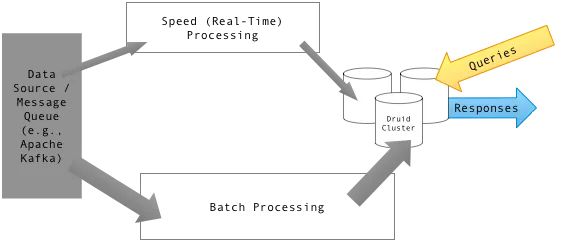
Photo: Textractor, CC BY-SA 4.0, via Wikimedia Commons
A Problem That Solved Itself Into a New Problem
Somewhere around 2012, the data engineering community declared war on fragmentation. The proliferation of siloed departmental databases — marketing running its own MySQL instance, finance maintaining a separate Oracle environment, product analytics living in a spreadsheet someone's director still emails around — was recognized as a genuine organizational liability. The solution, articulated with considerable confidence, was consolidation: a central data warehouse that would serve as the authoritative record for every business question.
A decade later, the average data infrastructure at a mid-sized American technology company includes an operational relational database, a cloud data warehouse, a real-time streaming platform, a feature store for machine learning, a document store for unstructured content, a graph database for relationship modeling, and, in many cases, a data lakehouse that was supposed to simplify all of the above. The single source of truth has become a distributed system of specialized truths, each optimized for a distinct access pattern — and the fragmentation that was supposed to be solved has returned in a more technically sophisticated form.
This is not a failure of execution. It is an outcome that was largely inevitable given how differently various data workloads actually behave.
Why One Database Was Never Really Enough
The appeal of the monolithic database approach rests on an assumption that data access patterns are fundamentally similar across different use cases. In practice, they are not. The requirements of a transactional system processing thousands of point writes per second are architecturally incompatible with the requirements of an analytical query scanning billions of rows to produce an aggregated report. Forcing both workloads onto the same storage engine produces a system that handles neither particularly well.
This tension has been understood at the theoretical level for decades. The CAP theorem, OLTP versus OLAP distinctions, and the evolution of columnar storage formats all reflect a longstanding recognition that different data workloads demand different architectural approaches. What has changed in the past several years is not the underlying theory — it is the practical accessibility of specialized tooling. Cloud-native data warehouses, managed streaming platforms, and purpose-built vector databases have reduced the operational barrier to adopting specialized stores to the point where the cost of the right tool is often lower than the cost of the wrong tool used at sufficient scale.
The result is that engineering teams no longer face a binary choice between a monolithic database and the complexity of managing distributed infrastructure. They face a more nuanced question: which specialized store is the right fit for each distinct workload, and how should those stores relate to one another?
A Taxonomy of Modern Data Stores and Their Actual Use Cases
Clarity about the problem requires clarity about the tools. The modern data ecosystem includes several broad categories of storage technology, each with distinct performance characteristics and appropriate use cases.
Operational databases — whether relational systems like PostgreSQL or document stores like MongoDB — are optimized for transactional consistency, low-latency point reads and writes, and the operational demands of application backends. They are not designed for large-scale analytical queries, and attempting to run complex aggregations against them at scale is a reliable path to degraded application performance.
Analytical warehouses — Snowflake, BigQuery, Redshift, and their equivalents — are built for exactly the workloads that operational databases handle poorly: high-throughput scans, complex joins across large datasets, and aggregation queries that support business intelligence reporting. Their write performance and transactional guarantees are deliberately limited in exchange for read performance at analytical scale.
Real-time streaming platforms — Kafka, Kinesis, Flink — address the temporal dimension that both operational and analytical stores handle awkwardly. They are optimized for processing events as they occur, enabling use cases like fraud detection, personalization, and operational monitoring that cannot tolerate the latency inherent in batch-oriented analytical pipelines.
Lakehouses — the category that Delta Lake, Apache Iceberg, and similar formats represent — attempt to bridge the gap between raw data storage in object stores and the query performance of structured warehouses. They are well-suited to organizations that need to maintain large volumes of raw data while supporting both exploratory analysis and structured reporting against the same underlying dataset.
Understanding these distinctions is not academic. It is the prerequisite for making architectural decisions that actually match the workload.
The Framework: Workload-First Data Architecture
The appropriate response to data layer fragmentation is not to resist specialization — it is to make specialization deliberate. Organizations that struggle most with data fragmentation are typically those that adopted specialized stores reactively, accumulating new databases in response to immediate problems without maintaining a coherent architectural model of how those stores relate to one another and to the business questions they are meant to answer.
A workload-first approach inverts this pattern. Rather than starting with a technology preference and fitting workloads to it, the process begins with an explicit inventory of data access patterns: What queries must return in under 100 milliseconds? What analytical workloads run on a batch schedule and can tolerate minutes of latency? What event streams require processing in real time? What datasets need to be preserved indefinitely at low cost while remaining queryable on demand?
Each category of access pattern maps to a storage technology that serves it well. The architectural work is not in selecting the right databases in isolation — it is in designing the data flows and integration patterns that allow specialized stores to maintain coherent relationships with one another. This includes decisions about where canonical records live, how changes propagate across stores, and how the organization reasons about consistency across systems that may briefly diverge.
The Liability Is Not Fragmentation — It Is Unmanaged Fragmentation
The framing of data fragmentation as inherently problematic is worth interrogating. Fragmentation becomes a liability when it is accidental — when specialized stores accumulate without deliberate integration patterns, when ownership is unclear, and when engineering teams lack a shared model of how data flows through the system. Under those conditions, the single source of truth does become a myth, and the consequences include inconsistent reporting, unreliable ML features, and engineering teams spending disproportionate time reconciling data rather than building with it.
But fragmentation that is deliberately designed — where each store serves a specific, well-understood purpose and integrates cleanly with adjacent systems — is not a liability. It is a precision architecture. It reflects the reality that different data workloads have genuinely different requirements, and that honoring those requirements produces systems that are faster, more reliable, and more maintainable than systems built on the premise that one storage engine can serve all purposes adequately.
The goal is not a single source of truth in the sense of a single database. It is a coherent, well-governed data architecture in which every store has a clear purpose, every data flow is intentional, and every engineering team understands where authoritative records live and how to access them reliably. That outcome is achievable — but only through deliberate architectural work, not through the selection of any single platform that promises to make the complexity disappear.