One Platform to Rule Nothing: The Hidden Performance Tax of All-in-One Tooling

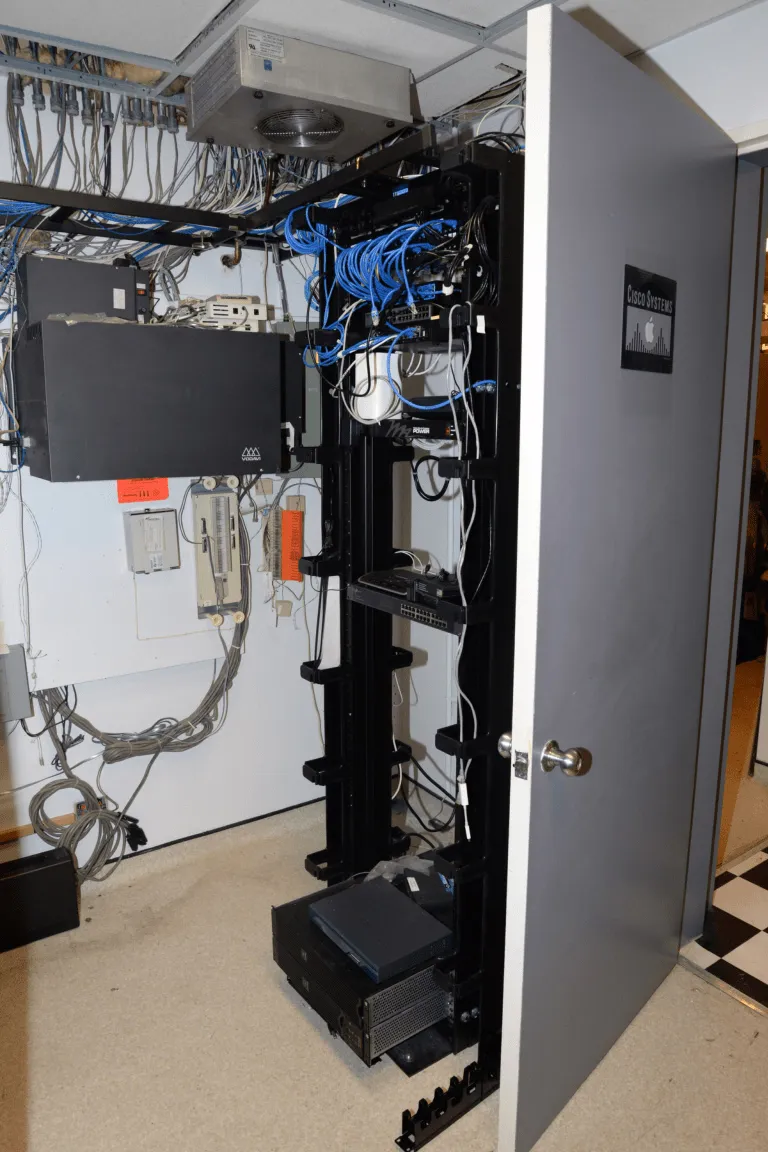
Photo: NAVFAC, CC BY 2.0, via Wikimedia Commons
The Consolidation Bargain Nobody Fully Prices
Every procurement cycle, the same conversation unfolds inside American technology organizations. A platform vendor arrives with a polished deck, a familiar logo, and a promise that resonates deeply with budget-conscious leadership: consolidate your stack, reduce overhead, and let a single product handle the complexity. The economics look clean. The vendor roadmap looks ambitious. And then, twelve to eighteen months later, engineering teams begin to notice something quietly wrong.
The CI/CD pipeline that once completed in four minutes now runs for eleven. The observability dashboard that used to surface anomalies in near real-time now lags by several minutes. The search functionality that powered customer-facing features has grown sluggish under query loads that, frankly, aren't that large. Nothing is broken. Everything is just slower — and in competitive markets, slower is a form of broken.
This is the silent cost of feature parity: the accumulated performance debt that emerges when a platform optimizes for breadth rather than depth.
What Feature Parity Actually Means in Practice
Feature parity, as a product development philosophy, means building just enough of a capability to check a box on a comparison spreadsheet. It does not mean building that capability well. It means building it well enough that a procurement team can justify the purchase.
Consider how a general-purpose observability module inside a consolidated DevOps platform approaches log aggregation. The engineering team behind that module is not solely focused on log ingestion performance, query optimization, or retention cost efficiency. They are dividing their attention across incident management, deployment pipelines, security scanning, and a dozen other features the platform must offer to remain competitive in its category. The result is a log aggregation tool that functions adequately — but that falls measurably short of what a purpose-built solution like a dedicated logging platform can deliver.
Specialized vendors, by contrast, have no alternative but to be excellent at the one thing they do. Their entire engineering organization is aligned around a single domain. Their roadmap is not fragmented across five product categories. When a performance bottleneck is discovered, it receives focused attention from teams whose professional identity is tied to solving exactly that class of problem.
The Benchmark Gap Is Not Theoretical
Organizations that have run structured comparisons between consolidated platforms and specialized toolchains consistently surface performance differentials that compound over time. Development teams using purpose-built CI systems report pipeline execution times that are thirty to sixty percent faster than equivalent configurations inside general-purpose platforms — not because the general-purpose platform is poorly engineered, but because pipeline execution speed is not the primary optimization target for a platform competing across twelve product categories simultaneously.
Similar patterns emerge in data processing, API management, and developer search tooling. The gap is rarely catastrophic in any single dimension. It manifests as a collection of modest inefficiencies: a slower build here, a degraded query response there, a notification delay that occasionally matters. Individually, none of these shortcomings would justify a platform migration. Collectively, they constitute a meaningful drag on engineering velocity.
For organizations competing in markets where time-to-feature and reliability directly influence customer retention, that drag is not abstract. It is a competitive disadvantage measured in sprint cycles and customer satisfaction scores.
Technical Debt Accumulates Differently With Consolidated Platforms
The technical debt conversation around all-in-one platforms tends to focus on lock-in risk — the concern that deep integration with a single vendor creates switching costs that limit future optionality. That risk is real, but it is not the most insidious form of debt that consolidation produces.
The more damaging debt is architectural compromise. When an organization adopts a consolidated platform, it frequently adjusts its technical approach to fit the platform's model rather than adjusting the platform to fit the technical need. Teams build workflows around the platform's limitations. Workarounds accumulate. Configuration complexity grows as engineers attempt to coax general-purpose tooling into domain-specific behavior it was never designed to deliver efficiently.
This accumulated compromise is difficult to measure on a quarterly basis. It appears in retrospective conversations about why a system behaves unexpectedly under load, why a particular workflow requires disproportionate maintenance effort, or why onboarding new engineers to a codebase takes longer than it should. The root cause is often not the code itself — it is the invisible architectural tax of building against tools that were never precisely calibrated for the job.
The Specialized Stack Requires Deliberate Architecture
None of this is an argument for unconstrained tool proliferation. Organizations that adopt specialized tooling without deliberate integration strategy introduce their own class of problems: connector complexity, data consistency challenges, and the operational burden of managing relationships with multiple vendors. The goal is not to maximize the number of vendors in a stack — it is to select tools with the precision that specific technical requirements demand.
High-performing engineering organizations in the United States are increasingly approaching their toolchains the way precision manufacturers approach component sourcing. They identify the functions that are genuinely performance-critical, select best-of-breed solutions for those functions, and invest in clean integration patterns that allow specialized tools to compose coherently. They reserve consolidated platforms for domains where adequate performance is genuinely sufficient and where administrative simplicity delivers real value.
This is not a simpler approach than consolidation. It requires more architectural judgment, more deliberate vendor evaluation, and more investment in integration quality. But it produces stacks that are faster, more adaptable, and more aligned with the specific technical realities of the organization building on them.
Precision Is a Competitive Posture
The organizations that will define the next generation of technical excellence are not the ones with the fewest vendors or the most unified billing portals. They are the ones that treat tooling selection as a strategic decision rather than an administrative convenience — the ones that ask not which platform covers the most ground, but which tools are genuinely exceptional at the functions that matter most to their competitive position.
Feature parity is a floor, not a ceiling. Building a technology organization on a foundation of adequate tools in every domain is a reliable strategy for achieving adequate outcomes. For teams that have higher ambitions, precision tooling is not a luxury. It is a prerequisite.